
Difference Between Part Time and Full Time
When searching for a new job, one of the first choices you’ll face is whether to accept a part-time or full-time position. While the difference may seem as simple as the number of hours you work, the reality is much broader.
The difference between part time and full time can affect your income, benefits, career opportunities, scheduling flexibility, and long-term financial goals. For employers, choosing the right mix of part-time and -employees also influences staffing costs, productivity, and customer service.
Whether you’re applying for your first job, changing careers, or hiring employees for your business, understanding these two employment types will help you make a more informed decision.
What Is Part-Time Employment?
Part-time employment generally refers to a work schedule with fewer weekly hours than a company’s standard schedule.
There is no single legal definition that applies everywhere. Many employers consider workers who put in fewer than 30 to 40 hours per week to be part-time employees, though the exact definition depends on the company’s policies, industry standards, and applicable labor laws. Because there is no universal rule for part-time status, employees should check their employer’s guidelines to understand scheduling expectations and benefits eligibility.
Part-time positions often include:
- Evening shifts
- Weekend schedules
- Flexible hours
- Seasonal work
- Job sharing
Businesses commonly use part-time employees to handle busy periods without increasing permanent staffing levels.
What Is Full-Time Employment?
Full-time employees usually work a regular weekly schedule determined by their employer.
In many workplaces, this means:
- 35 to 40 hours each week
- Consistent working days
- Ongoing employment
- Greater workplace responsibilities
Many organizations also provide additional employee benefits to staff, although eligibility depends on company policy and employment laws.
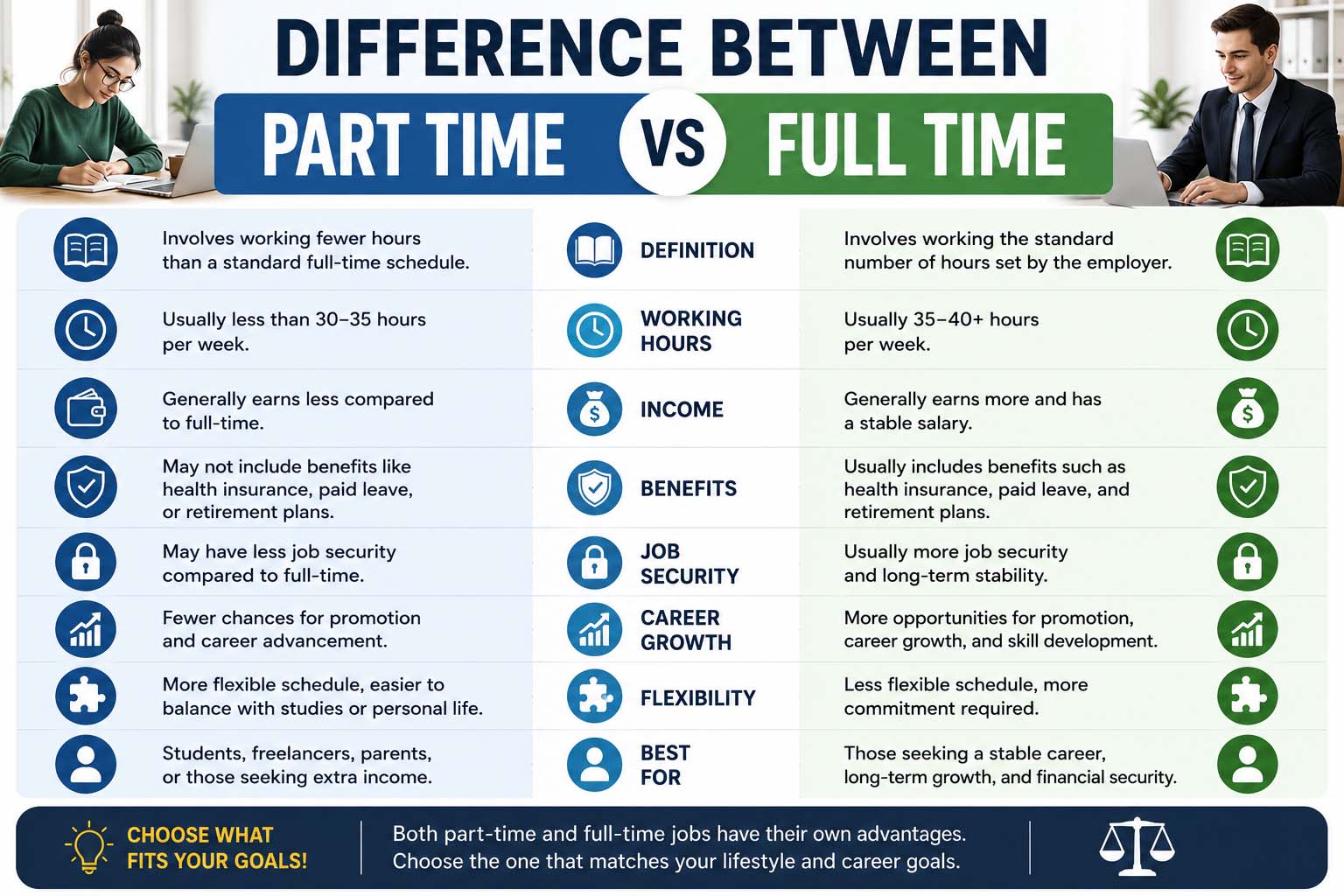
Difference Between Full Time and Part Time
The difference between full time and part time involves much more than weekly hours.
| Feature | Part-Time | Full-Time |
|---|---|---|
| Weekly Hours | Usually under 30–40 | Usually 35–40+ |
| Schedule | Often flexible | Usually fixed |
| Employee Benefits | Sometimes limited | Often more comprehensive |
| Total Income | Lower overall earnings | Higher overall earnings |
| Career Development | Varies | Often more opportunities |
The exact definition depends on the employer, but these differences are common across many industries.
What Is the Difference Between Part Time and Full Time?
Many job seekers ask, what is the difference between part time and full time before accepting a position.
Several factors separate these employment types.
Working Hours
The most obvious difference is the weekly schedule.
Part-time employees usually work fewer hours and may have changing schedules.
Full-time employees generally work consistent shifts throughout the week.
Income
Hourly pay can be similar for both employment types.
However, because full-time employees usually work more hours, their total earnings are often higher.
Benefits
Many companies provide additional benefits to full-time employees.
These may include:
- Paid vacation
- Sick leave
- Retirement contributions
- Health insurance
- Paid holidays
Some employers also offer benefits to part-time workers, but this varies widely.
Industries That Commonly Offer Part-Time Work
Part-time jobs are especially common in industries where customer demand changes throughout the day or year.
Examples include:
- Retail
- Hospitality
- Food service
- Education
- Recreation
- Healthcare
Healthcare careers provide a good example because employers often need flexible scheduling. Some positions discussed in Surgical Tech Jobs may be available on either a part-or full-time basis depending on the hospital or healthcare facility.
Advantages of Part-Time Employment
Part-time work offers several practical benefits.
Greater Flexibility
Many employees choose part-time work because it provides more control over their schedules.
This flexibility can help balance:
- College classes
- Family responsibilities
- Personal projects
- Freelance work
- Retirement
Better Work-Life Balance
Working fewer hours often creates more time for hobbies, travel, volunteering, or caring for family members.
For many people, this balance is just as valuable as earning a higher salary.
Easier Career Changes
Part-time positions allow workers to gain experience while exploring a new career path.
This can reduce the pressure of making a major career change all at once.
Advantages of Full-Time Employment
Full-time employment also offers several important benefits.
Stable Income
A predictable work schedule generally provides more consistent earnings.
This stability can make it easier to:
- Plan monthly expenses
- Build savings
- Qualify for loans
- Prepare for retirement
Career Advancement
Many organizations promote employees who consistently contribute to long-term projects and leadership opportunities.
Although part-time employees can certainly advance, workers often have greater access to training, mentoring, and management positions.
Comprehensive Benefits
For many employees, workplace benefits become a major advantage of full-time employment.
Health insurance, retirement plans, paid leave, and professional development programs may add considerable value beyond base salary.
Choosing the Right Staffing Model as an Employer
Business owners often combine both employment types to meet operational needs.
Part-time staffing works well for:
- Peak shopping hours
- Seasonal demand
- Weekend coverage
- Temporary projects
Full-time staffing is often better for:
- Leadership positions
- Customer relationship management
- Administrative work
- Long-term business planning
Organizations that experience rapid growth sometimes partner with Human Resources Outsourcing Services to simplify recruiting, onboarding, payroll, and workforce management for both part-time and full-time employees.
Employment Stability During Business Changes
Economic conditions can sometimes force employers to reduce labor costs.
In these situations, understanding the Difference Between Furlough and Layoff helps both employers and employees recognize how temporary reductions in working hours differ from permanent job losses, and how each situation may affect part-time and staff differently.
Knowing these distinctions allows businesses to communicate workforce decisions more clearly while helping employees understand their options.
Which Option Fits Your Career Goals?
The best employment type depends on your priorities.
Part-time work may be the better choice if you value:
- Flexible scheduling
- Additional free time
- School or family commitments
- Gradual career changes
Full-time work may suit you better if you prioritize:
- Stable income
- Employee benefits
- Career growth
- Long-term job security
Neither option is universally better. The right choice depends on your personal goals, financial needs, and lifestyle.
Real-World Examples
Looking at real workplace situations makes the difference between employment types easier to understand.
Example 1: College Student
A university student works 20 hours each week at a retail store.
The flexible schedule allows time for classes, studying, and extracurricular activities while earning extra income.
For this employee, part-time work is the better fit.
Example 2: Office Professional
A marketing coordinator works 40 hours each week with a regular Monday-to-Friday schedule.
The position includes paid vacation, health insurance, and retirement benefits.
This arrangement provides long-term financial stability and opportunities for promotion.
Example 3: Healthcare Worker
Many healthcare careers offer both employment options. Someone exploring the Physical Therapy Assistant Salary Guide may notice that clinics, hospitals, and rehabilitation centers often hire both part-and staff depending on patient demand and operating hours.
Which Employment Type Is Better for Businesses?
Business owners should evaluate their staffing needs before deciding how many employees to hire in each category.
Part-Time Employees May Be Best When:
- Customer traffic changes throughout the day.
- Seasonal demand increases.
- Labor costs need to remain flexible.
- Weekend or evening coverage is required.
Full-Time Employees May Be Best When:
- Long-term projects require continuity.
- Specialized skills are needed.
- Leadership roles must be filled.
- Customer relationships depend on consistency.
Many successful companies use a combination of both employment types to balance costs with operational efficiency.
Factors to Consider Before Accepting a Job
If you’re deciding between two job offers, compare more than just the hourly wage.
Think about:
- Weekly hours
- Employee benefits
- Career growth opportunities
- Commute time
- Schedule flexibility
- Overtime expectations
- Company culture
A slightly lower salary may be worthwhile if the role offers better benefits or a healthier work-life balance.
Workplace Productivity
Whether employees work part or full time, productivity remains one of the most important measures of success.
Many businesses use What Is Productivity Software to organize projects, manage deadlines, improve communication, and help both office-based and remote employees complete their work more efficiently regardless of their schedule.
Well-designed systems often allow part-time and full-time teams to collaborate effectively.
Common Misunderstandings
Several myths continue to confuse job seekers.
Part-Time Jobs Don’t Lead to Careers
Many people begin in part-positions before moving into roles.
Strong performance, reliability, and willingness to learn often create new opportunities.
Full-Time Jobs Always Offer Benefits
Not every employer provides the same benefit package.
Always review the employment agreement before accepting a position.
More Hours Always Mean Better Income
Working additional hours may increase earnings, but benefits, commuting costs, taxes, and work-life balance should also be considered.
Looking at total compensation gives a more complete picture than salary alone.
Common Mistakes When Choosing Between Part-Time and Full-Time Work
Avoiding these mistakes can help you make a better career decision.
Focusing Only on Pay
Higher income isn’t the only factor that matters.
Benefits, flexibility, and long-term career opportunities can also provide significant value.
Ignoring Personal Goals
Your ideal work schedule should support your lifestyle as well as your financial needs.
For example, students and parents may value flexible hours more than maximum weekly earnings.
Not Asking About Advancement
Before accepting a position, ask whether part-time employees have opportunities to move into roles or management positions.
Understanding the company’s career pathway can help you make a better long-term decision.
Frequently Asked Questions
What Is the Difference Between Full-Time and Part-Time?
The main difference is the number of hours worked each week. Full-time employees usually work a standard weekly schedule, while part-time employees work fewer hours. Benefits and career opportunities may also differ.
What’s the difference between part time and full time?
Part-time positions generally offer greater scheduling flexibility, while jobs often provide higher overall income, additional benefits, and more opportunities for career advancement.
Can part-time employees receive benefits?
Yes. Some employers offer benefits to part-time workers, although eligibility depends on company policy and local employment laws.
Is full-time employment always better?
Not necessarily. The better option depends on your financial goals, family responsibilities, education, health, and preferred work-life balance.
Can a part-time job become full-time?
Yes. Many employers promote reliable part-employees into positions when business needs change or new opportunities become available.
Which option is better for students?
Many students prefer part-time employment because it provides income while leaving enough time for classes and studying.
Choosing the Best Option for Your Situation
Understanding the difference between part time and full time helps you evaluate job opportunities with greater confidence.
If flexibility, education, or family responsibilities are your priority, part-time employment may be the right fit. If you’re focused on stable income, employee benefits, and long-term career growth, full-time employment often offers more opportunities.
Taking a broader view will help you choose an employment arrangement that supports both your current needs and your future career goals.